About Project
MT Services Portal
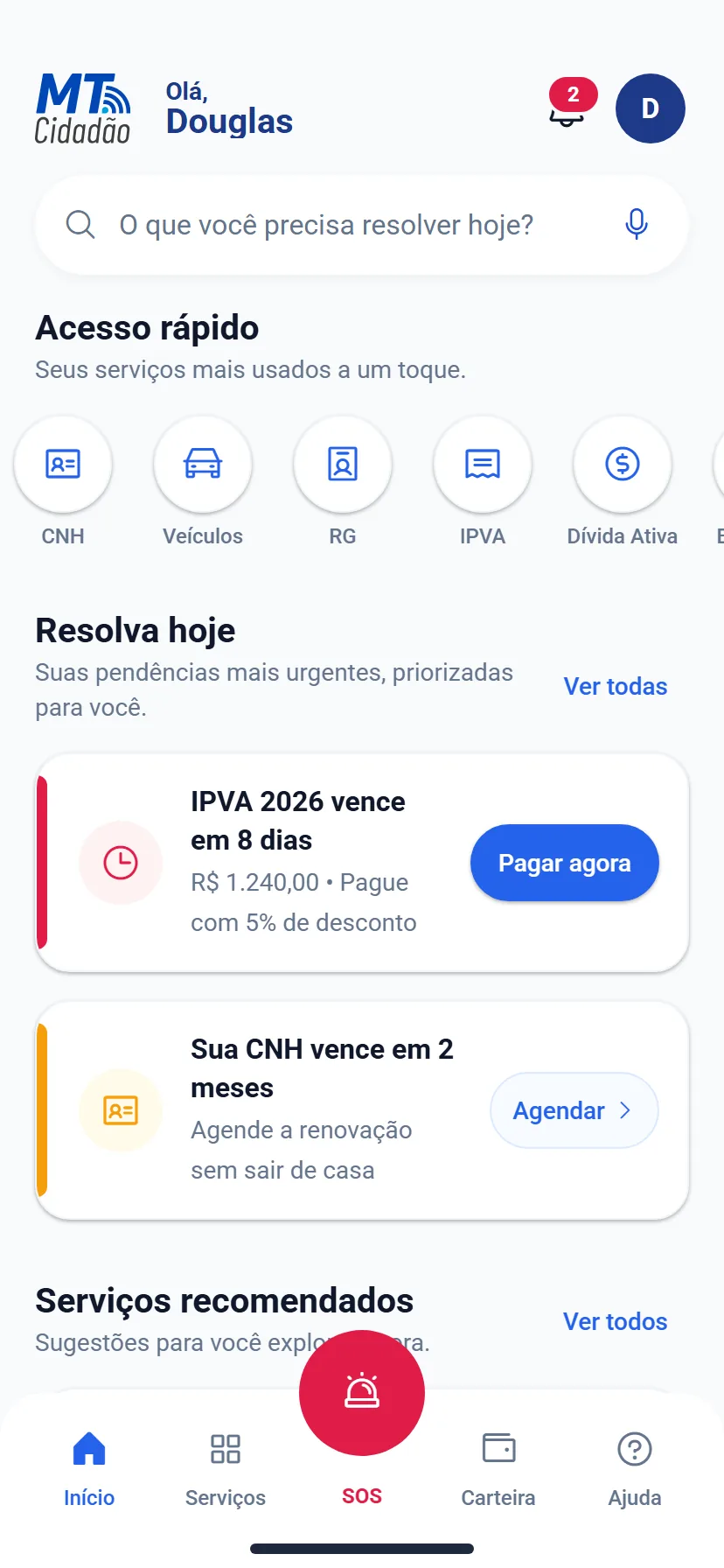
The digital front door of the Mato Grosso state government, where citizens look for duplicate documents, appointments and certificates. A high-traffic public product, live at portal.mt.gov.br.
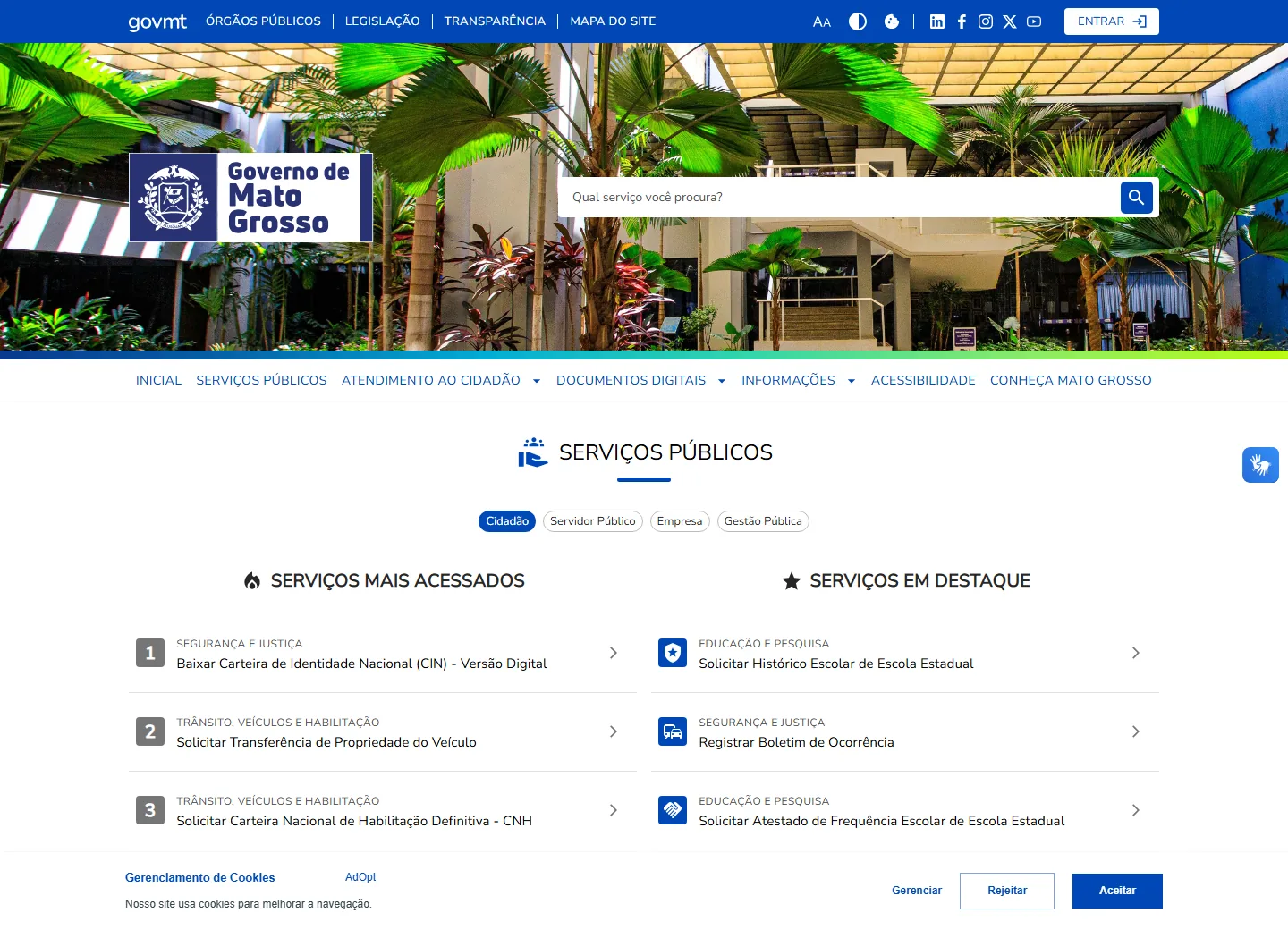
The home organises services by audience — citizen, civil servant, company and public administration.
Ongoing role: product, design system, accessibility and interface.
- Design system maintained as a single source across design and code;
- WCAG embedded in tokens, components and flows;
- Research and testing turned into product decisions;
- Front-end components aligned with the system.
The challenge
A government portal has a problem private products don't: the audience is everyone. There is no comfortable target persona, no “our user is young and digital”. There is the 70-year-old renewing a driving licence, the civil servant checking a payslip and the company issuing a certificate — at the same address, on the same day.
On top of that: scale. High traffic means any interface decision is multiplied by hundreds of thousands of sessions, and that inconsistency is expensive — in support, in rework, and in people who give up and go to the counter in person.
What I do here
-
01
The design system as single source
Building and maintaining the portal's design system: documented tokens, components and patterns. The practical goal is to cut rework between design and engineering — whoever builds receives a specification, not an interpretation.
-
02
Accessibility as a requirement
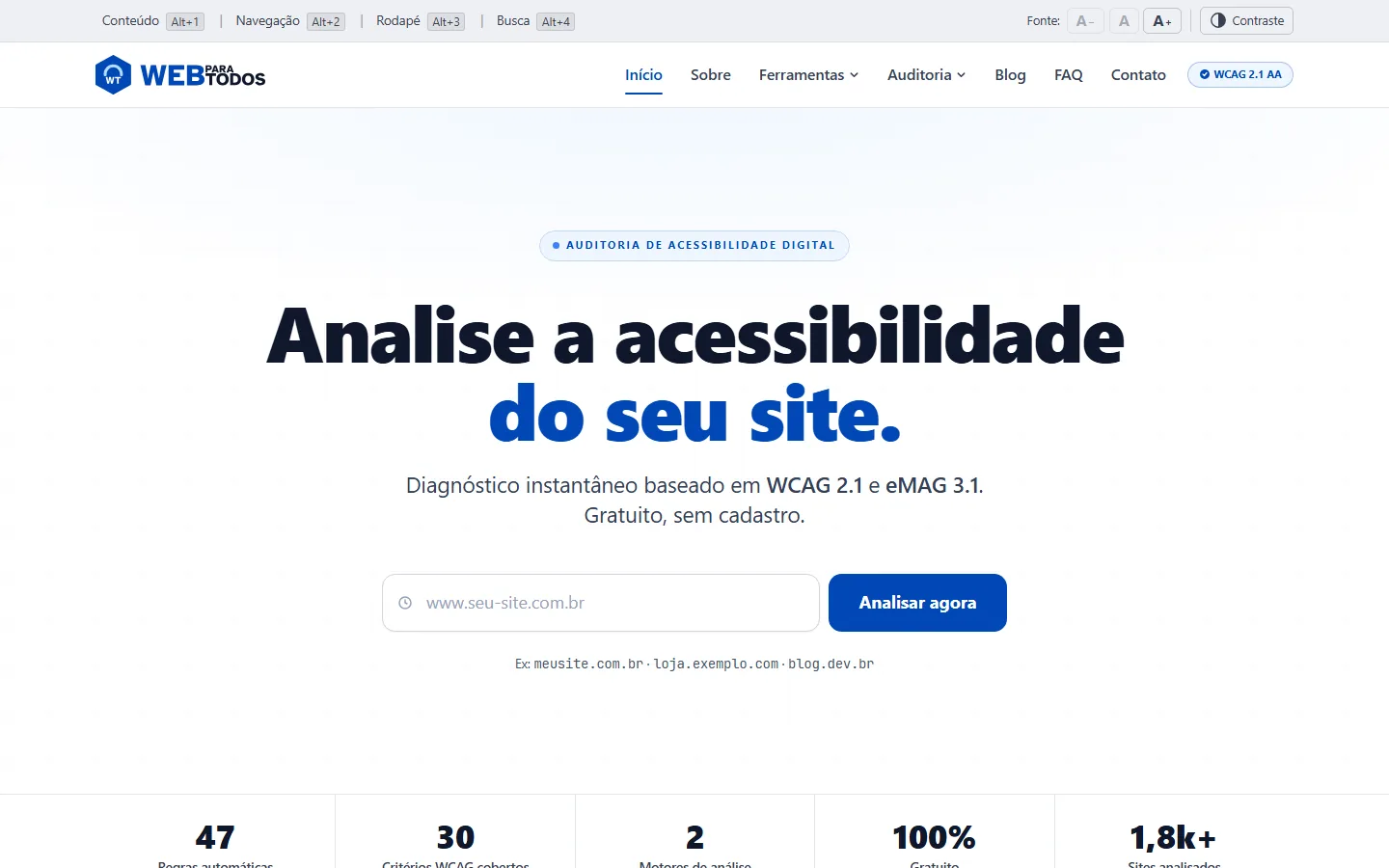
WCAG conformance driven from the design stage rather than audited afterwards: contrast validated when the palette is chosen, focus order decided in the wireframe, text alternatives written alongside the artwork. In public service that is not a differentiator — it is a legal and ethical obligation.
-
03
Research that decides
Interviews, focus groups, surveys and qualitative/quantitative analysis backing the decisions. Plus usability testing and heuristic evaluation, with actionable recommendations — not a report nobody opens.
-
04
From artefact to component
Personas, journeys, wireframes and low- and high-fidelity prototypes to iterate fast — and, where it makes sense, the component already built in front-end code aligned to the design system.
Why this matters for brand products too
A public portal is the stress test for any design system: if it survives a heterogeneous audience, old devices, poor connections and screen readers, it survives practically any product. The constraints here became my quality bar — and they cost neither performance nor beauty.